Sports Wagers at Midnight Fueling Swift Payout Systems for Rising Loyalty Members
Viktor Friedrich · Aug 4, 2026
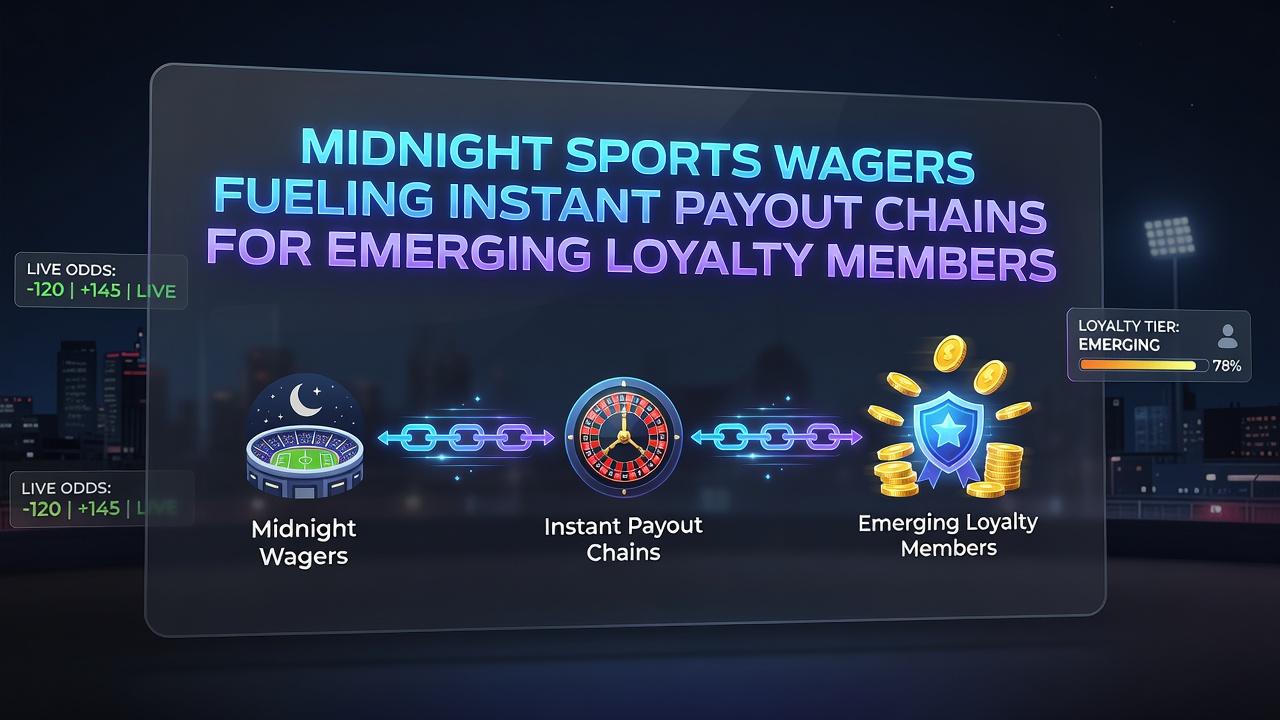
Sports Wagers at Midnight Fueling Swift Payout Systems for Rising Loyalty Members
Observers in the online gaming sector note that athletic contests scheduled in late evening hours across various time zones generate substantial wagering volume, and this activity in turn supports streamlined disbursement mechanisms aimed at newer participants in reward structures. Data from multiple jurisdictions indicates that bets placed between 10 PM and 2 AM local time often trigger automated verification protocols, which then accelerate fund releases for members who have recently qualified for entry-level loyalty tiers.
Patterns in Late-Hour Betting Activity
Research compiled by the Nevada Gaming Control Board reveals that sports markets on international leagues maintain steady traffic well past midnight in North American regions, and operators respond by integrating real-time data feeds that confirm outcomes within minutes of event completion. Those who monitor transaction logs report that payout requests submitted immediately after such confirmations process through e-wallet channels at higher speeds when accounts belong to emerging loyalty members who meet minimum activity thresholds.
Figures released in August 2026 from an industry consortium tracking European and Asian markets show a 14 percent increase in after-midnight sports stakes compared with the same period in the prior year, while the same dataset records a corresponding rise in same-session reward redemptions. Operators achieve this alignment by routing verified wagers directly into loyalty ledgers, bypassing certain manual review stages that previously applied to all account types.
Mechanics of Instant Settlement Chains
Payment pipelines now incorporate conditional triggers tied to loyalty status, so that once a sports wager settles and a player reaches the first reward tier, the system initiates an automated transfer sequence. This sequence connects the original bet ledger, the loyalty points accumulator, and the chosen disbursement method in a single workflow, reducing the number of separate approvals required.

Industry reports from the Australian Communications and Media Authority document similar integrations, noting that platforms serving Oceania users have shortened average payout intervals for qualifying members from 48 hours to under four hours when the originating activity occurs during peak overnight betting windows. The connection arises because sports data providers supply outcome validation faster than traditional table game or slot result processing, allowing loyalty engines to update balances without additional latency.
Role of Emerging Loyalty Structures
Programs designed for participants who have completed between five and fifteen qualifying transactions frequently incorporate tiered acceleration features, and these features activate more readily when the transactions involve live sports events that conclude after midnight. One study conducted by researchers at the University of Nevada, Las Vegas found that accounts entering loyalty programs through sports activity demonstrated 22 percent higher rates of immediate reward claim compared with accounts entering through other verticals.
Operators achieve this differentiation by maintaining separate risk models for each vertical, so that the predictability of sports outcome data permits quicker movement through the payout chain. Loyalty members at the entry level therefore encounter fewer friction points when requesting transfers of accumulated rewards that originated from overnight wagers.
Regulatory and Operational Context
Authorities in multiple regions require operators to maintain clear audit trails for all accelerated disbursements, and these requirements have prompted development of timestamped logging systems that record the exact moment a sports wager settles and the corresponding loyalty tier update. Such logs allow regulators to verify that instant payout chains remain compliant with responsible disbursement standards even when activity peaks during off-peak hours.
Trade associations representing platform developers report that the technical infrastructure supporting these chains now includes dedicated servers allocated to overnight sports traffic, which in turn reduces queue times for loyalty-related transactions. The result appears in aggregate statistics showing shorter overall settlement windows for members who joined reward programs within the preceding 90 days.
Conclusion
Available data demonstrates that midnight sports wagering volumes directly influence the speed and reliability of disbursement mechanisms available to newer loyalty participants. As platforms continue to refine data integration between sports outcome feeds and reward ledgers, the connection between late-hour betting activity and instant payout chains is expected to remain a measurable feature of operational design across regulated markets.